
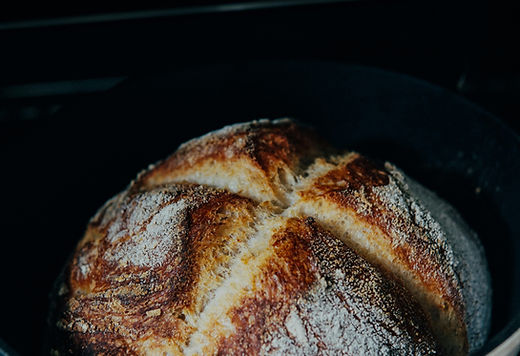
Ingredients
475g Whole Wheat Flour: High-protein (13%+) is essential for structure.
375g+ Water: Split into 300g (dough) and 75g (boiling scald). Keep an extra 20g handy.
100g Active Starter: Used at its bubbly peak.
10g Salt: Approx. 2% for flavor and gluten control.
Optional: 1 tbsp honey (enhances crust browning).
Preparation
Sift & Separate: Sift the 475g of flour. Reserve the ~50g–70g of coarse bran remaining in the sieve.
The Scald: Mix reserved bran with 75g rolling boiling water (212°F) into a paste. This gelatinizes starches and softens "razor-like" fiber. Cover and cool completely.
The "White" Autolyse: Mix the sifted flour with 300g room-temp water. Rest for 2 hours to build gluten strength without bran interference.
The Mix: Incorporate 100g starter, 10g salt, and optional honey. Fold in the cooled bran paste. Note: If the dough feels like stiff clay, use the Rubaud Method to work in an extra 10–20g of water until supple.
Bulk Fermentation: Perform 4 sets of "Stretch and Folds" every 30 minutes. Let rise in a warm spot until grown by 50–75%.
Cold Retard: Shape and refrigerate in a Banneton for 12–24 hours. This long rest is vital for breaking down complex whole-grain starches.
High-Heat Bake (Phase 1): Preheat your oven and baking vessel (or steam pans) to 500°F. Score the cold dough 1/2" deep at a 45° angle. Bake covered (or with active steam) for 20 minutes.
The Finish (Phase 2): Remove the lid or steam source. Vent the oven for 10 seconds to release moisture. Lower the temperature to 450°F and bake for 20–25 minutes. Whole wheat browns faster; watch closely to avoid a bitter crust.
Internal Check: Done when the digital thermometer reads 205°F–210°F.
No Lidded Pot? Use These Steam Hacks:
The Inverted Roaster: Place your dough on a tray and cover with an inverted stainless steel turkey roaster.
Lava Rock Method: Place a pan of lava rocks on the bottom rack during preheat. Pour 1 cup of boiling water over them immediately after loading the bread to create a massive steam cloud.
The "Cure": Once finished, turn the oven off and crack the door for 10 minutes with the loaf inside. This ensures a shattery, professional crust.
Timing & Visual Cues
The Scald Consistency: Your bran paste should look like thick oatmeal. If it’s too dry, the bran won't soften; if it's too wet, it will throw off your final hydration. Stick to the 75g water ratio unless you see dry flour pockets.
The "Jiggle" Test: During Bulk Fermentation (Step 5), don't just look for a 50-75% rise. Gently shake the bowl; the dough should jiggle like set gelatin. This indicates that the air bubbles are trapped and the gluten is strong.
Scoring Depth: Because whole wheat is heavier than white bread, it has a harder time "lifting" in the oven. Ensure your score is a confident 1/2" deep. If it’s too shallow, the gases will be trapped, leading to a denser crumb.
Equipment Performance
Preheat Duration: Even if your oven says it is at 500°F after 20 minutes, your baking stone or heavy pot needs at least 45–60 minutes to fully saturate with heat. This "thermal mass" is what causes the explosive oven spring.
Steam Safety: If you use the Lava Rock Method, be extremely careful of the steam burst when you pour the water. Wear a long oven mitt and keep your face away from the door.
Estimated Nutrition (Per 100g / ~2 Slices)
Calories: 230–250 kcal
Protein: 9–11g
Fiber: 6–8g
Carbohydrates: 45–50g
Fat: 1.5–2g
Sodium: 350–400mg
This "Sift & Scald" method is a brilliant approach to whole wheat sourdough. By isolating the bran and treating it with boiling water, you’re essentially "disarming" the sharp edges of the fiber that usually cut through gluten strands, resulting in a much loftier loaf than standard whole wheat recipes.
To help you get the most out of this recipe, I’ve organized the technical highlights and added a few "pro-tips" for the trickier steps.
Why This Method Works
The Scald (Gelatinization): Boiling water breaks down the starches in the bran, making it soft and sweet rather than gritty.
The "White" Autolyse: By resting the sifted flour and water alone, you allow the gluten to bond uninterrupted by the bran "knives."
Cold Retard (Enzymatic Activity): The 12–24 hour fridge rest allows enzymes to break down phytic acid, making the nutrients more bioavailable and the flavor more complex.
Critical Success Factors
Step | What to Watch For | Success Cue |
Sifting | Use a fine-mesh sieve (#30 or #40 is ideal). | You should be left with roughly 10-15% of the total weight in bran. |
The Mix | Incorporating the scalded paste into the dough. | Use a "pinching" motion with your fingers to ensure the paste is fully integrated without lumps. |
Hydration | Whole wheat is thirsty and variable. | If the dough feels "teary" or breaks during folds, add that extra 20g of water immediately. |
The Bake | The 500°F initial blast. | This high heat is non-negotiable for whole wheat to overcome the weight of the grain. |
Troubleshooting & Tips
The "Flying Crust": If you notice a large gap between the top crust and the crumb, it usually means the dough was slightly under-fermented or the oven was too hot on top. Ensure your steam source is robust.
Sticky Bran: If the scalded bran is too sticky to work with, wet your hands with cold water before folding it into the autolysed dough.
The Sieve: If you don't have a professional flour sieve, a fine-mesh kitchen strainer works, but you may need to "help" the flour through with a spoon.
Comparison: Standard vs. Sift & Scald
Standard Whole Wheat: Dense, "nutty" (sometimes bitter), tighter crumb, shorter shelf life.
Sift & Scald: Airy, mellow sweetness, soft texture, stays fresh longer due to the pre-gelatinized starch in the scald.
To master the Rubaud Method, think of your hand as a human dough hook. It is the best way to incorporate the scalded bran paste and extra water without tearing the delicate gluten you built during the autolyse.
The Rubaud Method "Cheat Sheet"
The Hand Position: Shape your dominant hand into a wide "claw" or "scoop." Keep your fingers stiff but slightly curved The Perfect Loaf.
The Action:
1. Reach under the dough and lift it upward.
2. Let the dough stretch under its own weight, then drop it back over the top.
3. Rotate the bowl slightly with your other hand and repeat rapidly.
The Goal: You are "whipping" air and the bran paste into the dough. Do this for 3–5 minutes.
The "Supple" Cue: Stop when the dough transitions from a "shaggy, chunky mess" to a smooth, cohesive mass that starts to pull away from the sides of the bowl.
Pro-Tips for this Specific Recipe
Wet Your Hand: Keep a bowl of room-temp water nearby. Dipping your hand frequently prevents the high-hydration dough from sticking to you like glue.
Pinch First: Before starting the Rubaud motion, use your thumb and forefinger to "pinch" the cooled bran paste into the dough to break up large clumps.
Temperature Check: Ensure the scalded bran is completely cool (below 80°F) before starting. If it's warm, it will degrade the gluten and turn your dough into "soup" during the Rubaud mixing.